

Description
For small and marginal farmers, choosing the right crops is critical for steady income and long-term sustainability. Cash crops are grown primarily for sale and profit rather than household consumption. When selected wisely, they can generate higher returns even from limited landholdings. Understanding the best cash crops for small farmers helps reduce risk, improve income, and support livelihood security.
This article explores high-demand, high-value cash crops suitable for small farmers, along with profitability insights and practical considerations.
What Are Cash Crops?
Cash crops are agricultural products grown mainly for commercial sale in local, national, or international markets. Unlike staple food crops, cash crops are chosen based on market demand, pricing, and profit potential.
Examples include vegetables, spices, oilseeds, flowers, and medicinal plants.
Why Cash Crops Are Ideal for Small Farmers
Cash crops offer several advantages for small landholders:
-
Higher income per acre
-
Shorter crop cycles
-
Flexibility in crop rotation
-
Opportunities for value addition
-
Better integration with local markets
With proper planning, small farmers can earn more from less land.
Key Factors to Consider Before Choosing Cash Crops
Before selecting a cash crop, farmers should evaluate:
-
Soil type and climate suitability
-
Water availability
-
Market demand and price stability
-
Input costs and labor requirements
-
Storage and transport facilities
Local conditions greatly influence profitability.
Best Cash Crops for Small Farmers
1. Vegetables (Tomato, Onion, Chilli)
Crop Cycle: Short (2–4 months)
Investment: Moderate
Profit Potential: High
Vegetables offer quick returns and continuous harvesting. Crops like tomato, onion, and chilli have strong market demand throughout the year.
Why Suitable:
-
High yield per acre
-
Frequent cash flow
-
Suitable for small plots
2. Spices (Turmeric, Ginger, Garlic)
Crop Cycle: Medium (7–9 months)
Investment: Moderate
Profit Potential: High
Spices are high-value crops with strong domestic and export demand.
Why Suitable:
-
Good price realization
-
Long shelf life after drying
-
Scope for processing and branding
3. Pulses (Moong, Urad, Chickpea)
Crop Cycle: Short to medium
Investment: Low
Profit Potential: Moderate to high
Pulses improve soil fertility and require fewer inputs.
Why Suitable:
-
Lower fertilizer costs
-
Government MSP and support
-
Rising protein demand
4. Oilseeds (Mustard, Groundnut, Sesame)
Crop Cycle: Medium
Investment: Low to moderate
Profit Potential: Moderate to high
Oilseeds are essential for edible oil production and offer stable demand.
Why Suitable:
-
Good market prices
-
Suitable for dry and semi-arid regions
-
Supports crop diversification
5. Medicinal and Aromatic Plants
Examples include tulsi, ashwagandha, lemongrass, and aloe vera.
Crop Cycle: Varies
Investment: Low to moderate
Profit Potential: High
These crops are increasingly used in pharmaceuticals and wellness industries.
Why Suitable:
-
High value per acre
-
Low water requirement
-
Growing market demand
6. Flowers (Marigold, Rose, Jasmine)
Crop Cycle: Short to medium
Investment: Moderate
Profit Potential: High
Flower farming offers excellent returns near urban markets.
Why Suitable:
-
Regular demand for festivals and events
-
Continuous harvesting
-
Suitable for small land areas
7. Fruits with High Market Value
Examples include papaya, banana, pomegranate, and guava.
Crop Cycle: Medium to long
Investment: Moderate
Profit Potential: High
High-density planting can increase profitability.
Why Suitable:
-
Consistent demand
-
Scope for value-added products
-
Longer income period once established
8. Millets (Foxtail Millet, Little Millet)
Crop Cycle: Short
Investment: Low
Profit Potential: Moderate
Millets are gaining popularity due to health awareness.
Why Suitable:
-
Low input costs
-
Drought-resistant
-
Government promotion programs
High-Profit Cash Crops for Very Small Landholdings
For farmers with less than one acre:
-
Leafy vegetables
-
Mushrooms
-
Microgreens
-
Nursery plants
These crops offer intensive cultivation and high income per square meter.
Improving Profitability of Cash Crops
Small farmers can maximize profits by:
-
Using quality seeds and improved varieties
-
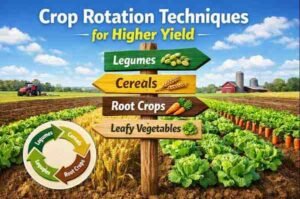
Practicing crop rotation and intercropping
-
Adopting drip irrigation and mulching
-
Selling directly in local markets or through FPOs
-
Exploring organic or natural farming premiums
Value addition significantly improves income.
Risks and How to Manage Them
Common risks include:
-
Price volatility
-
Pest and disease outbreaks
-
Weather uncertainty
Risk management strategies:
-
Crop diversification
-
Contract farming
-
Crop insurance
-
Market-linked planning
Preparedness reduces income uncertainty.
Future Outlook for Cash Crops
With rising urbanization, health awareness, and export demand, cash crops are becoming increasingly important. Government support for horticulture, medicinal plants, and agri-entrepreneurship is creating new opportunities for small farmers.
Summary
Selecting the best cash crops for small farmers depends on local conditions, market access, and farming practices. Vegetables, spices, pulses, oilseeds, flowers, and medicinal plants offer strong income potential when managed efficiently.
With smart crop choices, proper planning, and market awareness, small farmers can achieve sustainable income and long-term growth.

Reviews
There are no reviews yet.