
Description
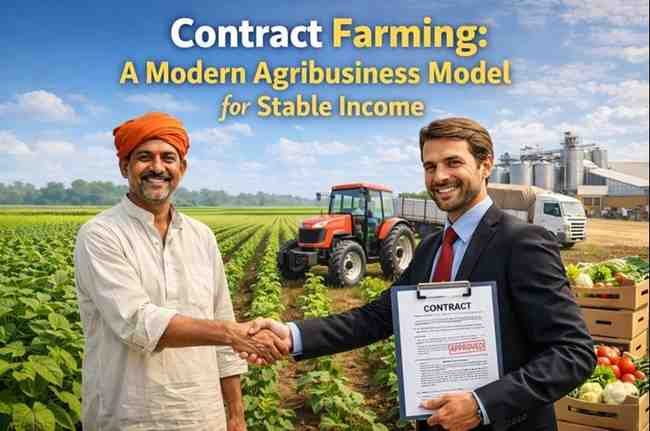
Contract farming has emerged as a structured and reliable approach to agricultural production, connecting farmers directly with buyers through pre-agreed terms. As agriculture becomes more market-oriented, this business model is gaining importance for ensuring income stability, reducing risk, and improving supply chain efficiency.
This article explains the contract farming business model, its structure, benefits, challenges, and future potential.
What Is Contract Farming?
Contract farming is an agricultural production system in which farmers produce crops or livestock based on a formal agreement with a buyer, such as agribusiness companies, processors, exporters, or retailers. The agreement typically specifies:
-
Crop or product type
-
Quality standards
-
Quantity
-
Price or pricing formula
-
Delivery schedule
This arrangement creates a direct link between production and market demand.
How the Contract Farming Business Model Works
The contract farming model operates through clear coordination between farmers and buyers.
Step-by-Step Process
-
Buyer identifies market demand
-
Contract is signed with farmers before sowing
-
Buyer may supply inputs and technical support
-
Farmers produce as per agreed standards
-
Harvested produce is purchased by the buyer
This system minimizes uncertainty for both parties.
Types of Contract Farming Models
Different forms of contract farming exist depending on control and involvement.
1. Market-Specification Model
The buyer specifies quality, quantity, and delivery time, while farmers manage production independently.
Common in: Fruits, vegetables, grains
2. Resource-Providing Model
The buyer supplies inputs such as seeds, fertilizers, or technical guidance.
Common in: Seed production, high-value crops
3. Production-Management Model
The buyer closely supervises farming practices to meet strict standards.
Common in: Poultry, dairy, and export crops
4. Integrated Model
The buyer controls most stages from production to processing and marketing.
Common in: Large agribusiness operations
Key Participants in Contract Farming
-
Farmers or farmer groups
-
Agribusiness companies
-
Food processors
-
Exporters and retailers
-
Cooperatives and producer organizations
Strong coordination among stakeholders ensures success.
Advantages of Contract Farming for Farmers
Income Stability
-
Assured market and price
-
Reduced price fluctuations
Reduced Risk
-
Lower marketing risk
-
Input and technical support
Access to Technology
-
Improved seeds and practices
-
Quality control systems
Improved Productivity
-
Better planning and farm management
Benefits for Agribusiness Companies
-
Consistent supply of raw materials
-
Quality assurance
-
Lower procurement risk
-
Traceability and compliance
This model strengthens supply chain efficiency.
Challenges in Contract Farming
Despite its advantages, contract farming faces challenges.
Common Issues
-
Power imbalance between farmers and buyers
-
Contract enforcement problems
-
Price disputes
-
Dependency on single buyer
Transparent contracts and regulatory support are essential.
Legal and Regulatory Framework
In many countries, including India, contract farming is regulated through:
-
Written agreements
-
Dispute resolution mechanisms
-
Farmer protection clauses
Clear legal frameworks help build trust and accountability.
Role of Farmer Producer Organizations (FPOs)
FPOs strengthen the contract farming model by:
-
Negotiating better contract terms
-
Reducing individual farmer risk
-
Improving bargaining power
-
Facilitating collective marketing
Collective participation enhances sustainability.
Contract Farming vs Open Market Farming
| Aspect | Contract Farming | Open Market |
|---|---|---|
| Price | Pre-agreed | Market-based |
| Risk | Lower | Higher |
| Market Access | Assured | Uncertain |
| Technical Support | Often provided | Limited |
Contract farming offers predictability in uncertain markets.
Future Scope of Contract Farming
The demand for quality, traceable, and standardized agricultural products is increasing. Contract farming is expected to grow in:
-
Food processing
-
Export-oriented agriculture
-
Organic and sustainable farming
-
High-value crops
Digital platforms will further streamline contracts.
Summary
The contract farming business model represents a structured approach to modern agriculture, offering benefits to both farmers and agribusiness companies. When implemented transparently and ethically, it can enhance productivity, ensure stable income, and strengthen agricultural value chains.
As agriculture continues to commercialize, contract farming will play a vital role in creating sustainable and profitable farming systems.
Reviews
There are no reviews yet.