
Description
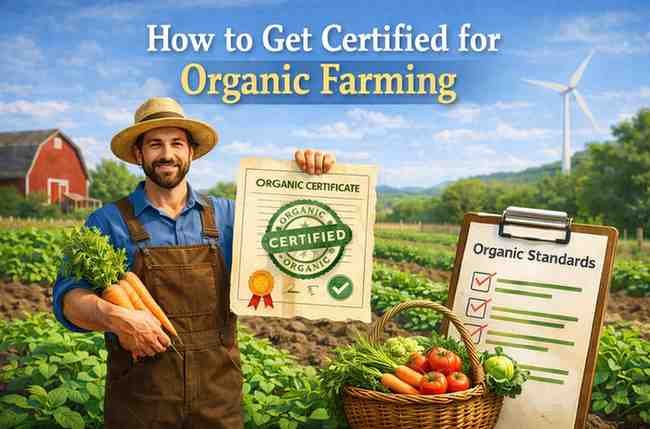
With the rising demand for chemical-free and sustainable food, organic farming certification has become essential for farmers seeking higher market value and consumer trust. Certification verifies that crops and livestock are grown following strict organic standards, helping farmers access premium markets domestically and internationally. This guide explains the organic farming certification process, requirements, and benefits.
What Is Organic Farming Certification?
Organic farming certification is a formal verification process conducted by authorized agencies to ensure that agricultural products are produced according to organic standards. Certified products are free from synthetic fertilizers, chemical pesticides, GMOs, and other prohibited substances.
Certification provides:
-
Consumer confidence
-
Market recognition
-
Premium pricing opportunities
Why Organic Certification Matters
Benefits for Farmers
-
Access to national and international organic markets
-
Higher profit margins due to premium pricing
-
Technical support and training opportunities
Benefits for Consumers
-
Assurance of chemical-free and healthy produce
-
Traceability of farming practices
Benefits for the Environment
-
Encourages sustainable soil and water management
-
Promotes biodiversity
-
Reduces chemical pollution
Key Organic Certification Standards
Different countries and organizations have specific standards. Popular examples include:
-
India Organic (NPOP – National Program for Organic Production)
-
USDA Organic (United States)
-
EU Organic Certification (Europe)
-
IFOAM (International Federation of Organic Agriculture Movements)
Compliance with these standards ensures global market acceptance.
Step-by-Step Organic Certification Process
1. Land Preparation and Transition
-
Begin by converting conventional farmland to organic practices
-
Transition period typically ranges from 2 to 3 years
-
Avoid chemical fertilizers and pesticides during this period
2. Documentation
-
Maintain farm records including seed sources, fertilizers, pest control, and irrigation practices
-
Document crop rotation, compost usage, and other organic methods
3. Choosing a Certification Agency
-
Select an accredited certifying body recognized by government or international agencies
-
Agencies verify compliance with organic standards
4. Application Submission
-
Submit detailed application forms with farm records and location information
-
Include farm maps and crop plans
5. Inspection and Audit
-
On-site inspection by certified inspectors
-
Assessment of farming practices, input usage, and storage facilities
-
Verification of compliance with organic standards
6. Corrective Actions (If Needed)
-
Address any discrepancies found during inspection
-
Provide additional documentation or make required changes
7. Certification Approval
-
Once compliance is verified, the farmer receives the organic certification license
-
The certification is valid for a specific period, usually 1 year, requiring annual renewal
8. Labeling and Marketing
-
Use certified organic labels on products
-
Promote the brand in national and international markets
Organic Certification Costs
-
Certification costs vary depending on farm size, crops, and agency
-
Includes application fees, inspection fees, and annual renewal charges
-
Many governments offer subsidies or financial support to reduce costs
Maintaining Organic Certification
-
Continuously follow organic farming practices
-
Maintain detailed records and documentation
-
Prepare for annual inspections
-
Report any changes in farm management or input use
Common Challenges in Organic Certification
-
Lengthy transition period
-
Record-keeping and documentation
-
Understanding complex standards
-
Market linkage after certification
Support from farmer organizations, extension services, and FPOs can help overcome these challenges.
Future Scope of Certified Organic Farming
The demand for certified organic products is growing globally due to health awareness and sustainable living trends. Certified organic farmers can:
-
Access premium markets
-
Enter export-oriented supply chains
-
Build long-term brand credibility
-
Contribute to environmental sustainability
Summary
The organic farming certification process ensures trust, quality, and market access. While it requires careful planning, compliance, and record-keeping, the long-term benefits in terms of income, consumer trust, and environmental impact make it a worthwhile investment for farmers.
Adopting certified organic farming opens doors to premium markets while promoting sustainable agriculture practices.
Reviews
There are no reviews yet.