
Description
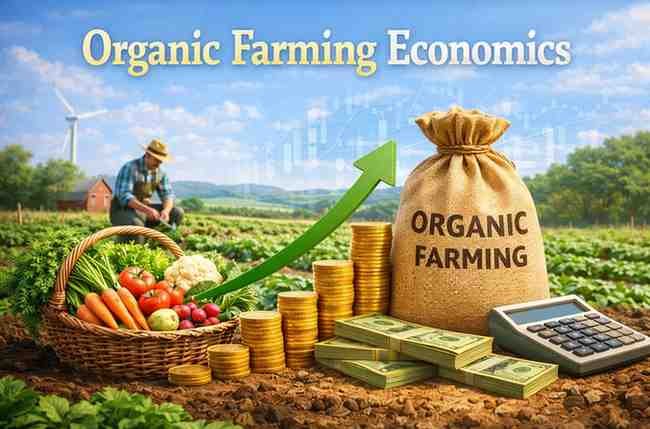
Organic farming is not just a sustainable choice—it’s increasingly a profitable business model. With rising demand for chemical-free produce, farmers are exploring organic farming as a source of higher income. However, profitability depends on careful planning, input management, and market access. This guide explains the cost structure, potential profits, and economic considerations for organic farming.
What Is Organic Farming?
Organic farming is an agricultural system that avoids synthetic fertilizers and pesticides. Instead, it relies on natural inputs, compost, crop rotation, and biological pest control to produce crops. Organic produce often commands premium prices in both domestic and international markets.
Cost Structure in Organic Farming
Understanding costs is essential for estimating profitability. Costs in organic farming are categorized as follows:
1. Land Preparation and Cultivation Costs
-
Plowing, leveling, and soil conditioning
-
Organic compost or green manure application
-
Organic seed purchase
-
Irrigation setup and maintenance
2. Input Costs
-
Organic fertilizers and biofertilizers
-
Botanical pesticides or biopesticides
-
Labor for weeding, mulching, and pest management
3. Labor Costs
-
Organic farming is more labor-intensive than conventional farming
-
Activities like manual weeding, intercropping, and organic pest control increase labor demand
4. Certification Costs
-
Organic certification involves inspection fees, documentation, and renewal charges
-
May include training and consultancy expenses
5. Post-Harvest and Marketing Costs
-
Grading, cleaning, and packaging
-
Storage in organic-compliant facilities
-
Transportation to local or export markets
Profit Potential in Organic Farming
Despite higher initial costs, organic farming can be highly profitable due to premium pricing and sustainable practices.
Factors Influencing Profit
-
Crop Choice
-
High-value crops like vegetables, fruits, spices, and herbs yield higher profits
-
-
Market Access
-
Selling through direct-to-consumer (D2C) channels or export markets increases income
-
-
Yield Management
-
Proper soil and pest management can maintain reasonable yields
-
-
Value Addition
-
Processing into organic jams, powders, or packaged products boosts revenue
-
Example Profit Comparison
| Crop | Conventional Yield (₹/acre) | Organic Yield (₹/acre) | Premium Price % | Approx. Profit (Organic) |
|---|---|---|---|---|
| Vegetables | 50,000 | 40,000 | 50% | 60,000 |
| Fruits | 70,000 | 60,000 | 40% | 84,000 |
| Spices | 60,000 | 50,000 | 60% | 80,000 |
Note: Numbers vary based on location, crop, market, and farm practices.
Cost-Benefit Analysis Tips for Organic Farmers
-
Choose the Right Crops: Focus on high-demand organic products with good market premiums
-
Reduce Input Costs: Use farm compost, green manure, and intercropping to minimize external inputs
-
Improve Market Linkages: Sell through certified organic stores, farmers’ markets, or online platforms
-
Adopt Efficient Practices: Mulching, drip irrigation, and biological pest control reduce labor and input costs
-
Consider Collective Farming: Farmer Producer Organizations (FPOs) help reduce costs and improve bargaining power
Challenges Affecting Profitability
-
Lower initial yields compared to conventional farming
-
Certification and compliance costs
-
Market fluctuations and seasonal demand
-
Skill and knowledge requirements
Overcoming these challenges requires proper planning, training, and access to markets.
Future Scope of Organic Farming Profits
The organic food market is expanding due to health-conscious consumers and sustainable living trends. Certified organic farmers can:
-
Tap into domestic premium markets
-
Enter export-oriented supply chains
-
Build long-term brand credibility
-
Achieve sustainable farm income
With proper crop selection, value addition, and marketing, organic farming can become a profitable and resilient business.
Summary
Understanding the cost and profit of organic farming is key to making informed decisions. While the initial investment and labor requirements may be higher, premium pricing, sustainable practices, and market demand can make organic farming significantly more profitable than conventional farming over time.
Organic farming is not only an ecological choice but also a viable business strategy for modern farmers seeking long-term income stability.

Reviews
There are no reviews yet.