
Description
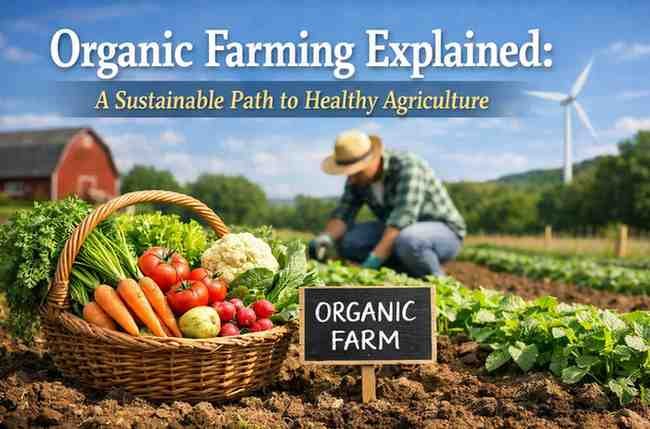
As awareness of food safety, environmental protection, and sustainable living grows, organic farming has gained global attention. It offers an alternative to chemical-intensive agriculture by focusing on natural processes, soil health, and ecological balance. This guide explains organic farming in detail and highlights why it matters in modern agriculture.
Understanding Organic Farming
Organic farming is an agricultural system that relies on natural inputs and biological processes to grow crops and raise livestock. It avoids synthetic fertilizers, chemical pesticides, genetically modified organisms (GMOs), and growth hormones.
The primary goal is to produce healthy food while maintaining environmental sustainability.
Core Principles of Organic Farming
Organic farming is based on four key principles:
1. Soil Health
Healthy soil is the foundation of organic farming. Practices focus on improving soil structure, fertility, and microbial activity.
2. Ecological Balance
Organic systems encourage biodiversity and natural pest control.
3. Sustainability
Farming methods aim to preserve natural resources for future generations.
4. Animal Welfare
Livestock is raised under humane conditions with organic feed and natural care.
Key Practices in Organic Farming
Organic farming uses a combination of traditional knowledge and modern techniques.
Natural Soil Fertility Management
-
Compost and farmyard manure
-
Green manuring
-
Crop rotation
Pest and Disease Control
-
Biological pest control
-
Botanical pesticides
-
Integrated pest management
Weed Management
-
Mulching
-
Manual and mechanical weeding
These practices reduce environmental impact.
Types of Organic Farming Systems
1. Pure Organic Farming
Uses only organic inputs and excludes all synthetic chemicals.
2. Integrated Organic Farming
Combines organic practices with livestock, composting, and recycling of farm waste.
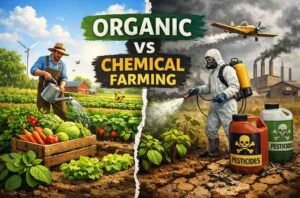
Organic Farming vs Conventional Farming
| Aspect | Organic Farming | Conventional Farming |
|---|---|---|
| Inputs | Natural | Chemical-based |
| Soil Health | Improves | Often degrades |
| Environmental Impact | Low | High |
| Food Safety | High | Moderate |
| Sustainability | Long-term | Short-term |
Organic farming focuses on long-term benefits.
Benefits of Organic Farming
Environmental Benefits
-
Improves soil fertility
-
Conserves water
-
Reduces pollution
Health Benefits
-
Chemical-free food
-
Higher nutritional quality
Economic Benefits
-
Premium market prices
-
Growing demand
-
Export opportunities
Organic farming supports both health and income.
Challenges in Organic Farming
Despite its advantages, organic farming has challenges:
-
Lower initial yields
-
Certification costs
-
Transition period requirements
-
Need for skilled management
Proper planning helps overcome these barriers.
Organic Farming Certification Process
Certification ensures product authenticity.
Key Steps
-
Transition period (2–3 years)
-
Regular inspections
-
Compliance with organic standards
-
Labeling approval
Certification builds consumer trust.
Organic Farming in India
India is one of the leading organic producers globally.
Key Highlights
-
Diverse agro-climatic zones
-
Strong export market
-
Government support for organic farming
-
Growing domestic demand
Organic farming is expanding rapidly.
Future Scope of Organic Farming
With increasing focus on sustainable food systems, organic farming offers strong growth potential. Innovations in bio-inputs, digital traceability, and market access will further strengthen the sector.
Summary
Organic farming is more than a method—it is a philosophy that balances productivity with environmental responsibility. By adopting organic practices, farmers can produce safe food, protect natural resources, and achieve sustainable income.
As demand for healthy and eco-friendly food continues to rise, organic farming will remain a vital part of the agricultural future.
Reviews
There are no reviews yet.