
Description
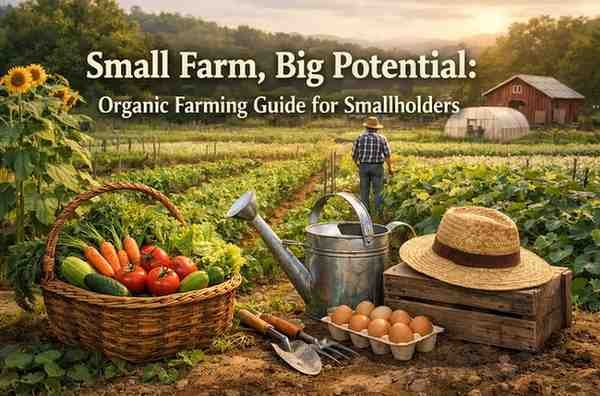
Small farmers often face challenges such as limited land, fluctuating crop prices, and rising input costs. However, organic farming offers a sustainable and profitable solution that allows smallholders to maximize income while protecting the environment. This guide explores how small farmers can adopt organic farming successfully and reap long-term benefits.
What Is Organic Farming for Small Farmers?
Organic farming is a method of cultivating crops and raising livestock without synthetic chemicals, relying on natural fertilizers, biological pest control, and sustainable practices. For small farmers, organic farming can transform limited land into a high-value income source.
The focus is on:
-
Soil fertility management
-
Eco-friendly pest and weed control
-
Sustainable resource use
Why Organic Farming Is Ideal for Small Farmers
Small farms can benefit significantly from organic methods:
1. Premium Market Prices
Organic produce fetches higher prices due to consumer demand for chemical-free food.
2. Reduced Input Costs
Farmers can reduce dependence on expensive chemical fertilizers and pesticides by using compost, green manure, and biological pest control.
3. Sustainable Production
Organic methods maintain soil health and biodiversity, ensuring long-term farm productivity.
4. Diversified Income
Value-added products such as organic jams, pickles, and powders can increase revenue from small landholdings.
Suitable Organic Farming Crops for Small Farms
Certain crops are ideal for small-scale organic cultivation due to their market demand and ease of management:
-
Vegetables: Tomatoes, spinach, carrots, bell peppers
-
Fruits: Papaya, guava, banana, mango
-
Spices & Herbs: Turmeric, coriander, mint, basil
-
Pulses & Millets: Chickpeas, lentils, foxtail millet
High-value crops can generate substantial income even on a small plot.
Key Practices for Smallholder Organic Farming
1. Soil Fertility Management
-
Composting farm waste
-
Green manuring
-
Crop rotation
2. Pest and Disease Management
-
Botanical pesticides (neem, garlic extract)
-
Companion planting and intercropping
-
Biological controls like ladybugs and predatory insects
3. Water Management
-
Drip irrigation
-
Rainwater harvesting
-
Mulching to reduce evaporation
4. Seed Selection
-
Use certified organic seeds
-
Maintain local seed varieties for resilience
Marketing Strategies for Small Farmers
Small farmers can maximize profits with strategic marketing:
-
Farmers’ Markets: Sell directly to consumers
-
Local Organic Stores: Partner with retail outlets
-
Online Platforms: D2C sales through e-commerce
-
Community-Supported Agriculture (CSA): Subscription-based model for urban consumers
Direct marketing improves price realization and reduces dependency on middlemen.
Benefits of Organic Farming for Small Farmers
| Benefit | Details |
|---|---|
| Income | Premium pricing increases revenue |
| Sustainability | Preserves soil and water resources |
| Health | Produces chemical-free food |
| Market Demand | Growing domestic and export markets |
| Risk Reduction | Reduced dependence on synthetic chemicals |
Challenges for Smallholders and Solutions
Challenges
-
Initial yield may be lower than conventional farming
-
Certification process can be complex
-
Labor-intensive practices
Solutions
-
Start small and gradually scale up
-
Join Farmer Producer Organizations (FPOs) for support
-
Leverage government schemes and subsidies
Government Support for Small Organic Farmers
Many governments offer financial assistance and training for smallholders:
-
Subsidies for organic inputs and certification
-
Training programs for sustainable farming
-
Market access support and fairs
Leveraging these schemes reduces costs and boosts profitability.
Future Outlook for Smallholder Organic Farming
With increasing consumer demand for chemical-free and sustainable food, organic farming offers small farmers a path to higher income, improved livelihoods, and environmental stewardship. Combining proper crop selection, value addition, and market access ensures long-term success.
Summary
Organic farming empowers small farmers by transforming limited land into a high-value, sustainable enterprise. With the right practices, marketing strategies, and government support, smallholders can achieve economic stability and environmental responsibility simultaneously.
Organic farming for small farmers is not just agriculture—it’s a smart business strategy for the future.

Reviews
There are no reviews yet.